
How to get the DMA through the audit
A conversation about what it takes for a double materiality assessment (DMA) to stand up to assurance, and how to work with the auditor along the way.
Published 8 October 2024
Guest: Carina Ohm, partner at PwC and head of the sustainability department in Denmark.
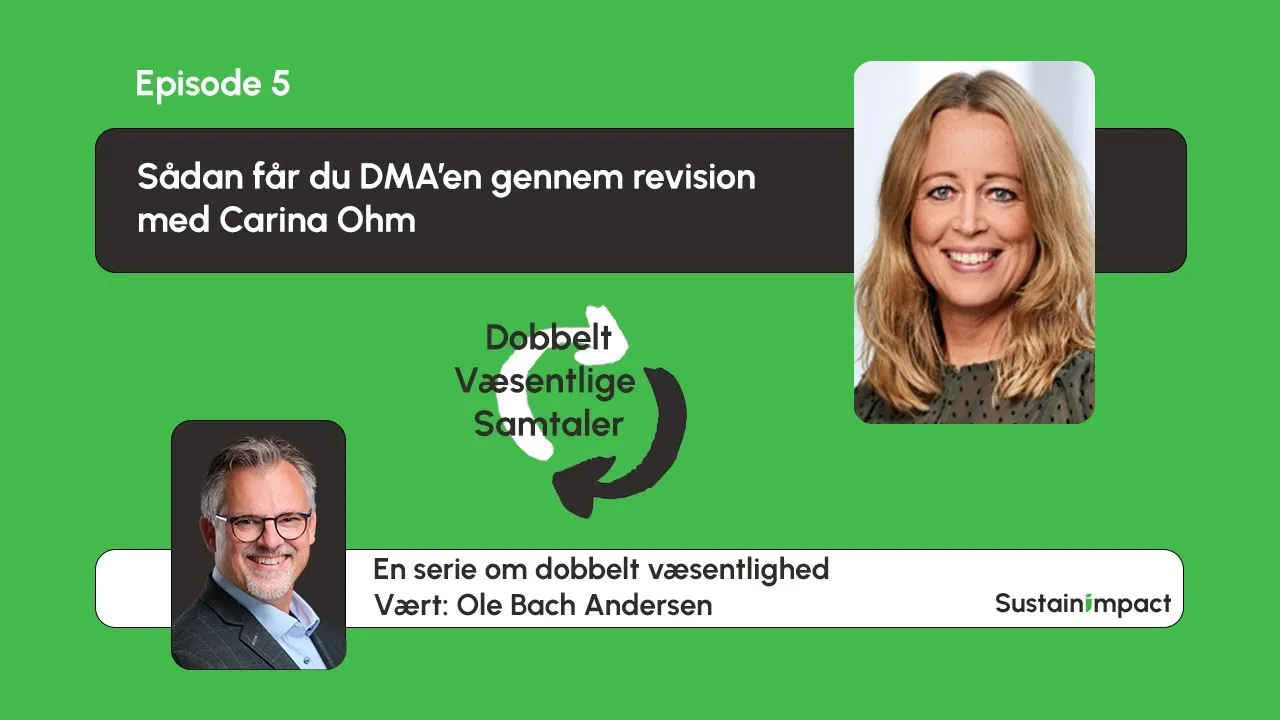
What it covers
The conversation covers how cooperation with the auditor can be built into the DMA process from the start, so that method and results can be reviewed as the work progresses rather than at the end. It also touches on the limits that apply when the same firm both advises and audits a client.
A recurring theme is documentation: the material has to be understandable to a third party, including why a topic was scored as it was.
- An audit trail set up while the DMA is being prepared
- Two documents for review: a method document and a systematic overview of the identified impacts, risks and opportunities with scores and supporting documentation
- The four areas the auditor gives an opinion on: the DMA process, compliance with ESRS, the EU Taxonomy and digital tagging
- Stakeholders that cannot be involved directly, and value chains beyond the first tier of suppliers
- Typical challenges companies have met so far
- Where the DMA creates most value, including the formal role of the board and top management
Read the full text
This is a short English summary. The full text is in Danish, and your browser can translate it for you.
Contact me
Reach out, and let us have an informal conversation about how I can help you.
- Phone
- +45 20 84 94 88
- ole@sustainimpact.dk