Why a DMA still matters — even after Omnibus
The Omnibus revisions narrowed the scope of mandatory CSRD reporting significantly. But the underlying logic of the double materiality assessment didn't change. It is still the most structured way to understand:
- How your organisation impacts sustainability topics — climate, biodiversity, people, communities
- How those same topics impact your business — through risk, opportunity, and resilience
Once material topics have been identified, the assessment becomes the foundation for reporting (where required), for revised business strategy, and for a credible roadmap toward a more resilient and long-term sustainable organisation.
Many organisations now run the assessment voluntarily — often under VSME — because customers, banks, and investors increasingly expect the work to have been done.

How we work together
We start by aligning on purpose and scope. The assessment can be a quick initial indication or a deep, fully documented foundation for prioritisation and communication — depending on what you need.
I can guide you through the process, assist on specific areas, or run the full assessment for you. We decide together what fits your situation.
Tools are flexible: I can work with platforms you've already chosen, help you select something appropriate, or use the tool I've developed myself — ESRS Universe™. I'm agnostic about tooling. Outcome and business impact are what matter.
Overview through the value chain
With a mapping of the value chain, you have a starting point for dialogue about what happens in each process step.
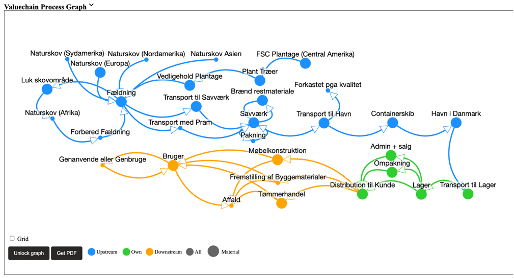
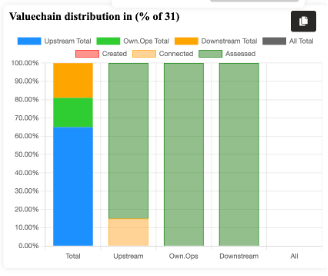
Automatically get an overview of the completion status of your value chain.
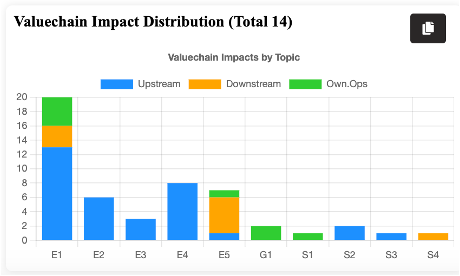
Get an overview of the impact your value chain has on sustainability topics:
360° stakeholder insights
Through interviews or surveys, you gain valuable insights from your stakeholders across the entire value chain. Decide who to include and get aha-moments that you can take business action on.
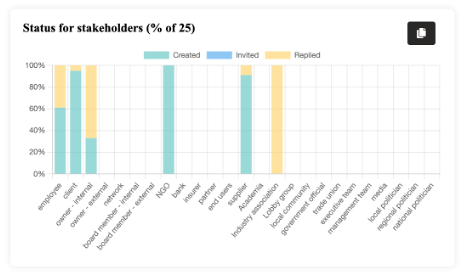
Get quick insights into your stakeholders' background.
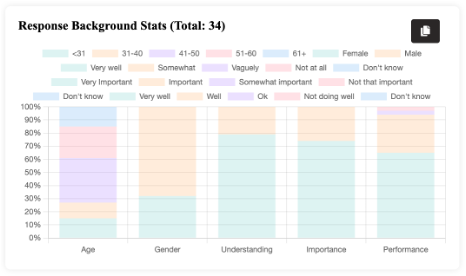
See the distribution of responses across sustainability topics.
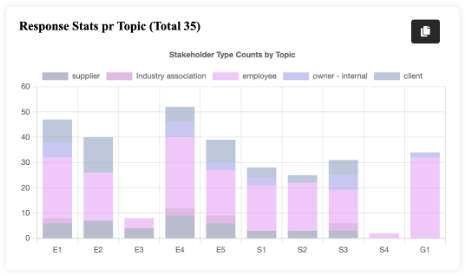
You can run the deeper analysis by exporting responses, or by using the built-in AI model.
Analyse Impacts, Risks, and Opportunities (IROs)
In your IRO analysis, you can directly use input from value chain and stakeholder analysis. You can build the longlist yourself and score each item.
If you need help, the AI model can suggest IROs based on your activities across different industries — and generate concrete risks and business opportunities from the identified impacts.
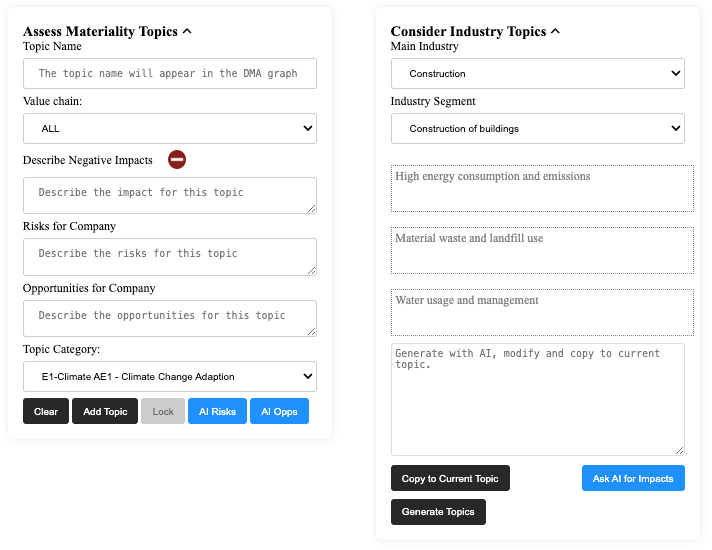
Industry-specific topic and impact suggestions.
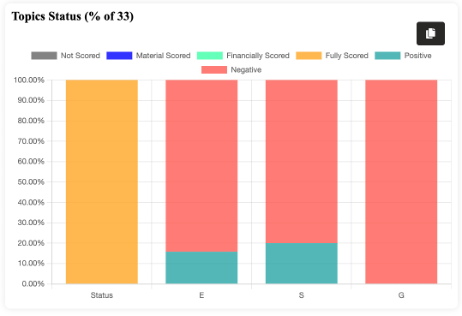
Track status on an ongoing basis.
Engage through workshops
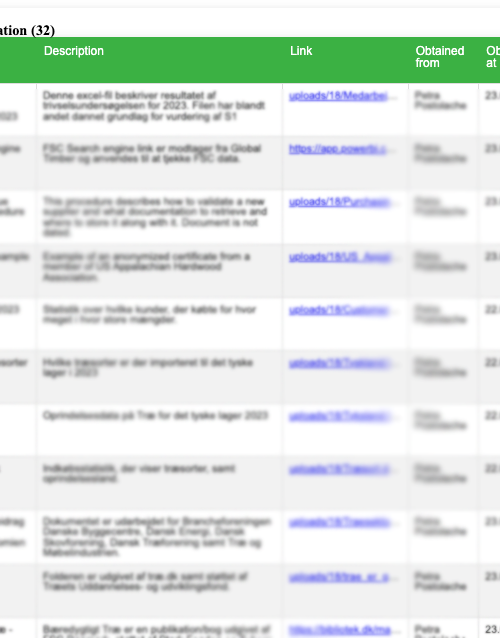
Run workshops and document the results directly in ESRS Universe™. Upload documentation and reference it in your report — for example when documenting an IRO scoring decision.

Upload the documentation and refer to it in your report, or for example when documenting the scoring of an IRO.
Prioritize and Report
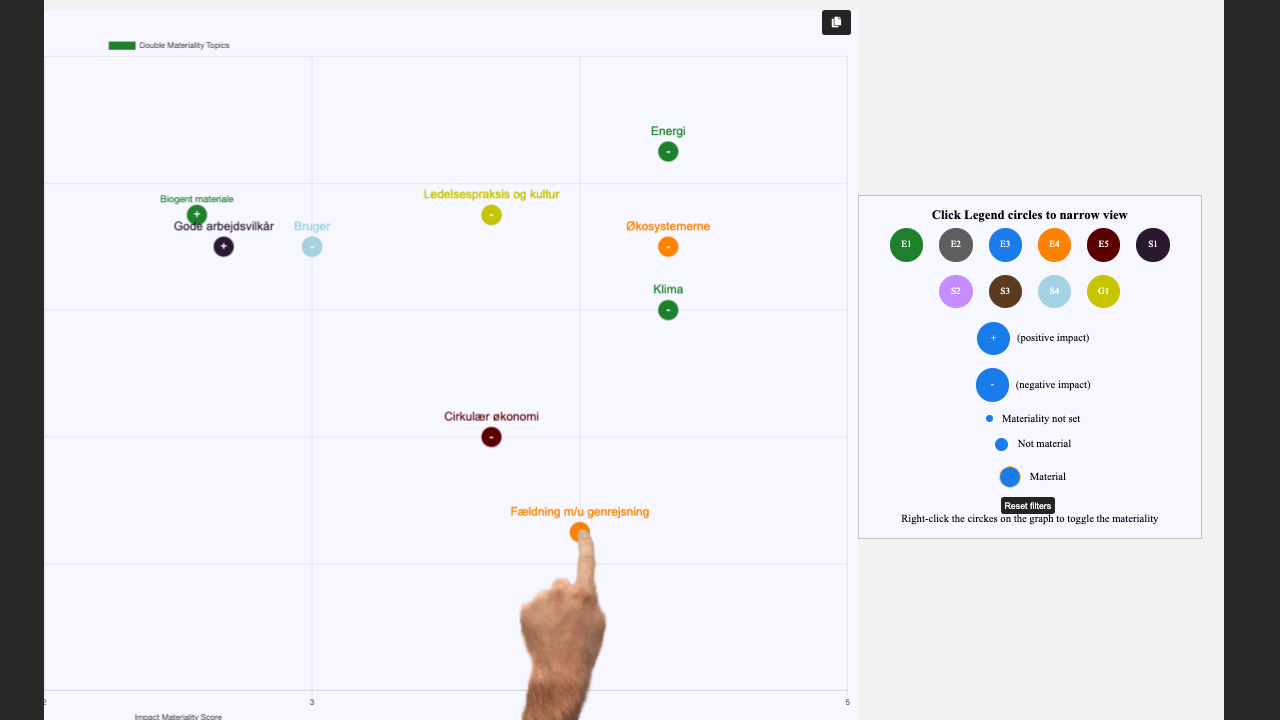
Use the system to select material topics based on an informed choice. Work directly in the priority graph.
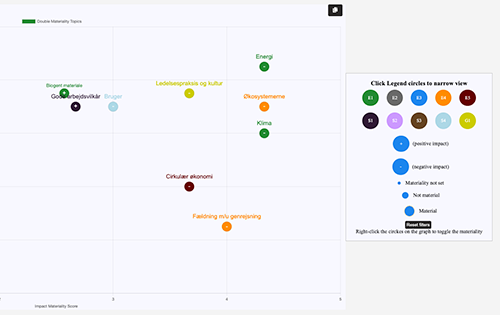
Once you have documented the process and the result, you can automatically generate a PDF report, with full graphical control over the output.